Web
Start a decision process directly in the hosted browser canvas build.
Open Ukuvota Open on itch.io
collective decisions without hidden resistance
version 0.2.0
Run
Ukuvota runs as a Kryon app on the web, Linux, and Android. The public repository includes the native source, Android project, web shell, and build scripts.
Start a decision process directly in the hosted browser canvas build.
Open Ukuvota Open on itch.ioClone, inspect, build, and package Ukuvota from the public GitHub repository.
GitHubDesktop and Android release packaging lives with the app and can be published from the same source tree.
ReleasesFlow
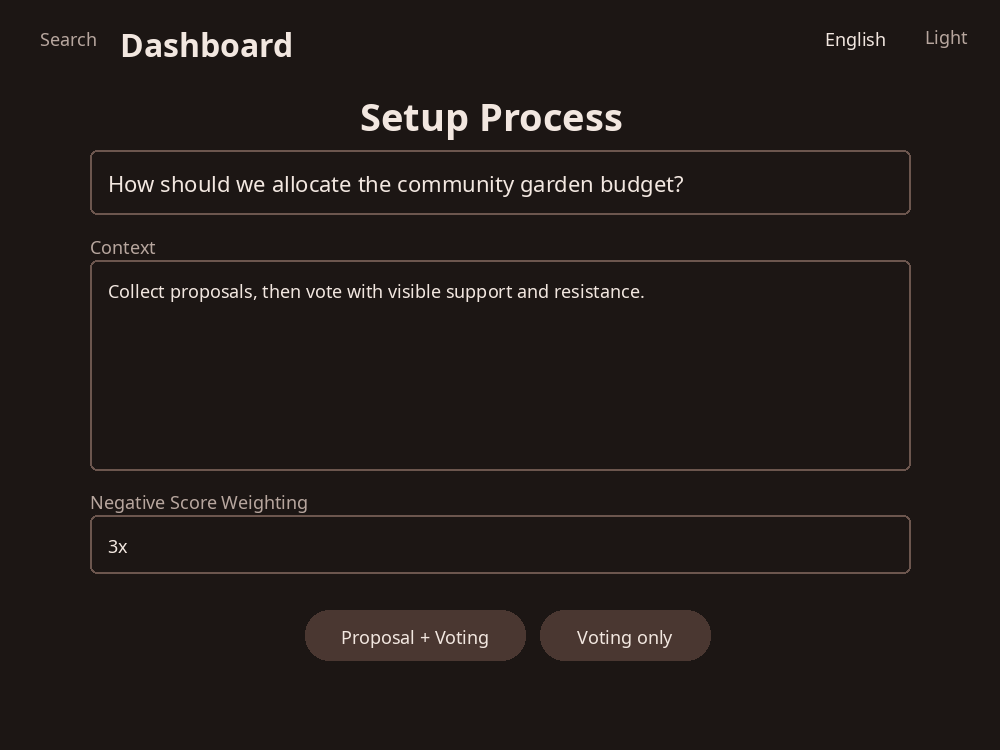
Name the decision, describe the context, and choose how the group will collect options.
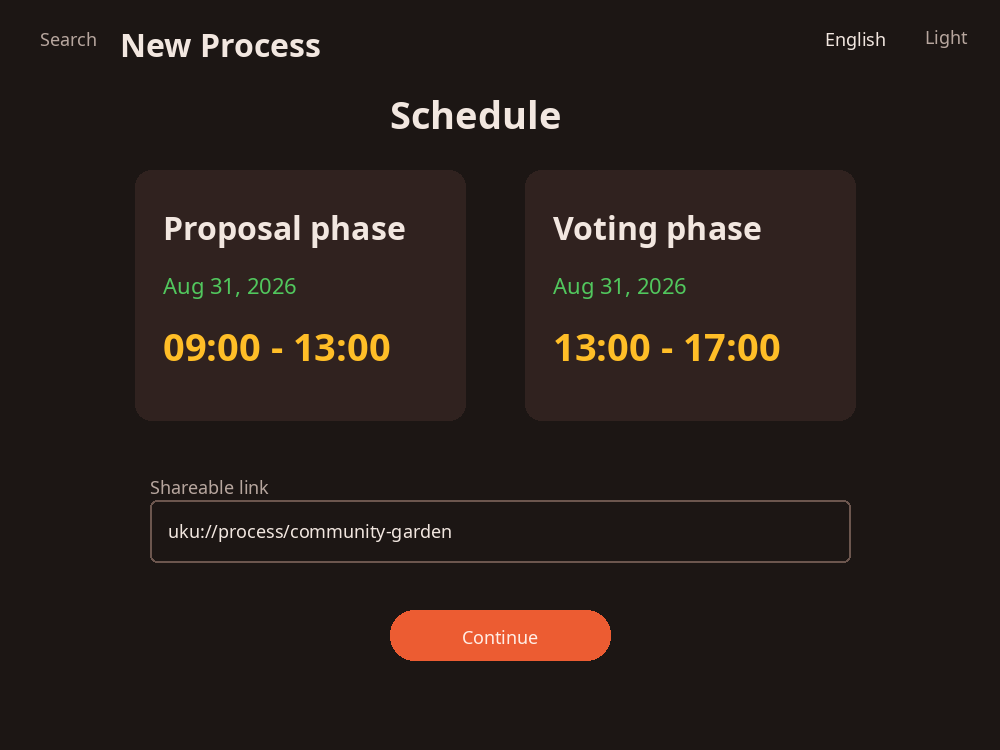
Keep proposal and voting windows explicit, so every participant knows when the result becomes final.
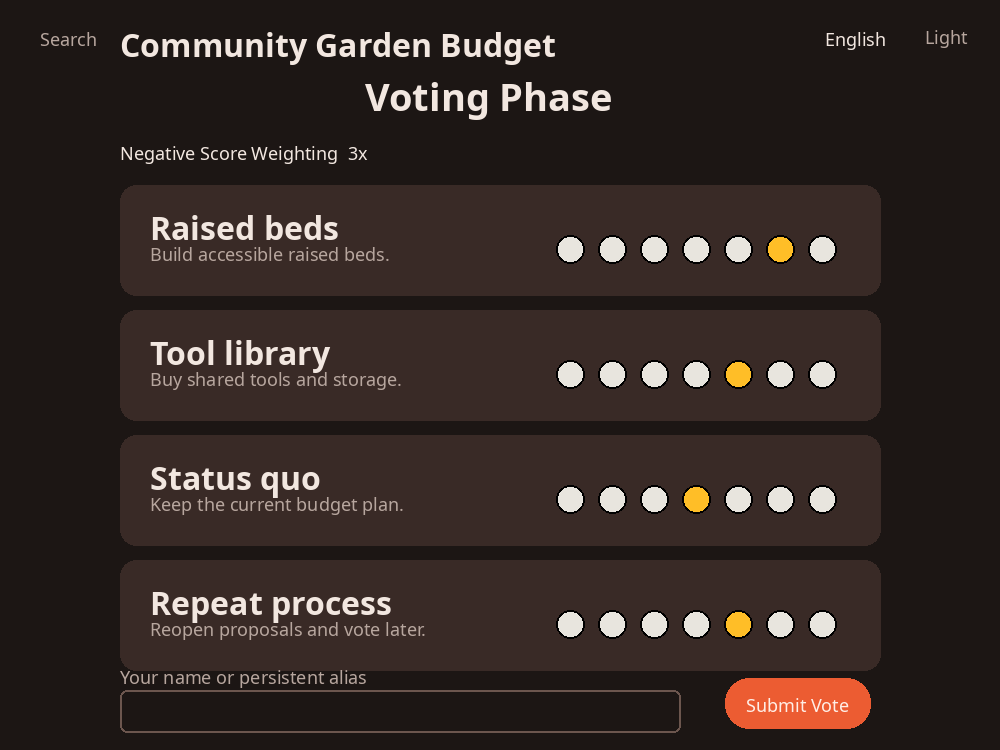
Participants score from -3 to +3. Negative scores are weighted so resistance is visible, not averaged away.
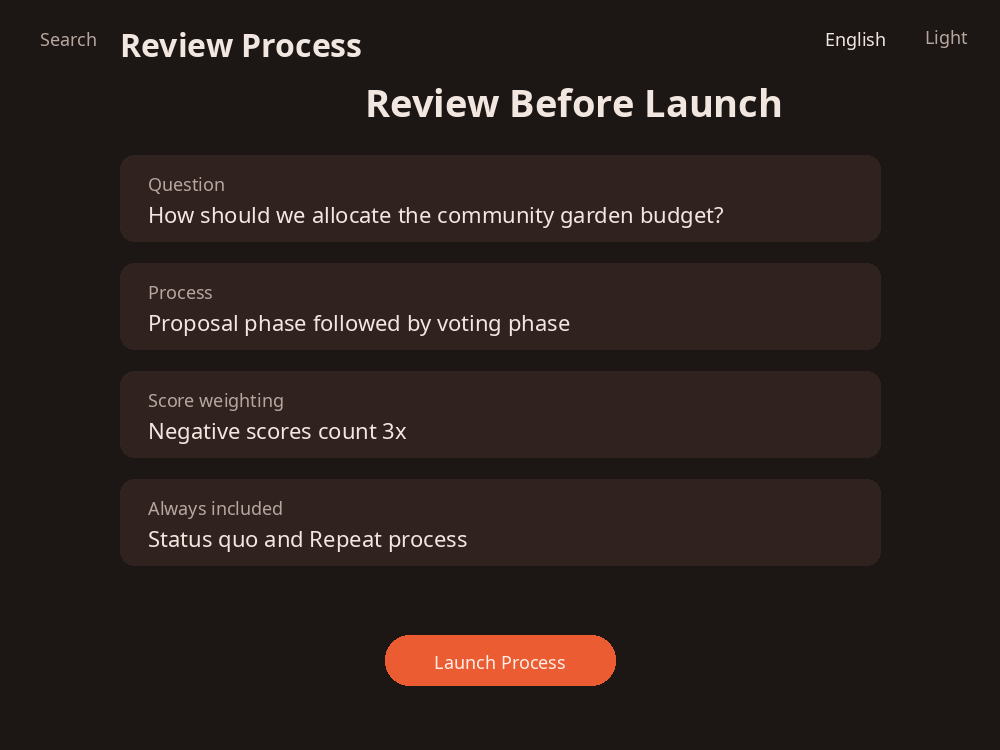
Status quo and Repeat process stay explicit choices instead of hidden defaults.
Features
Participants on the same device can choose a name and focus on the decision instead of account setup.
Negative scores make opposition visible, helping the group avoid brittle decisions.
Groups can collect options before voting, including template choices for common outcomes.
Save a ballot, then start the next participant with a separate local identity.
Keep decisions locally. Browser data persists between visits and can be downloaded as a backup. Online sharing is not connected yet.
Ukuvota is built in Ziran with Kryon, with the full app source available publicly.
Source
Ukuvota is part of the Waozi app family and uses Kryon for its native UI surface. The current implementation targets Linux, web, and Android.